Decommissioning Legacy Nokia and Ciena Systems Without Service Disruption
The rapid expansion of high-capacity telecommunications networks has forced operators into a continuous cycle of modernization. To support the staggering data demands of 5G infrastructure and enterprise cloud architectures, carriers are aggressively installing new optical transports and high-density routing platforms. However, the most critical and challenging phase of these modernization projects is not the activation of the new technology; it is the physical decommissioning of the legacy Nokia and Ciena systems that are being replaced.
The problem facing network engineers is the structural complexity of legacy transport environments. These older platforms often carry high-revenue enterprise circuits, critical backhaul data, and voice traffic simultaneously. Executing a physical removal of legacy infrastructure while maintaining absolute network uptime is a high-wire act where a single coordination mistake can trigger a catastrophic regional service outage. To protect your business from SLA penalties and reputational damage, you need a disciplined, surgical decommissioning protocol.
The Risk of the Unmapped Legacy Environment
The root cause of most decommissioning accidents is the presence of unmapped network dependencies. Over a decade of continuous operation, telecom racks experience dozens of emergency patches, configuration workarounds, and undocumented cable runs. The active routing tables in your network operations center may suggest a circuit has been completely migrated, but the physical reality on the rack can be completely different.
If a technician cuts a fiber run or drops a breaker based on outdated documentation, they can instantly take down adjacent, mission-critical systems that were sharing physical infrastructure or power loops. You cannot manage a telecom teardown with generic field labor. You need an engineering-led team that possesses a deep technical understanding of legacy architectures and the specific physical design of enterprise optical networking platforms.
Nationwide Telecom De-Installation and Decommissioning Services
The SunCoast Surgical De-Installation Methodology
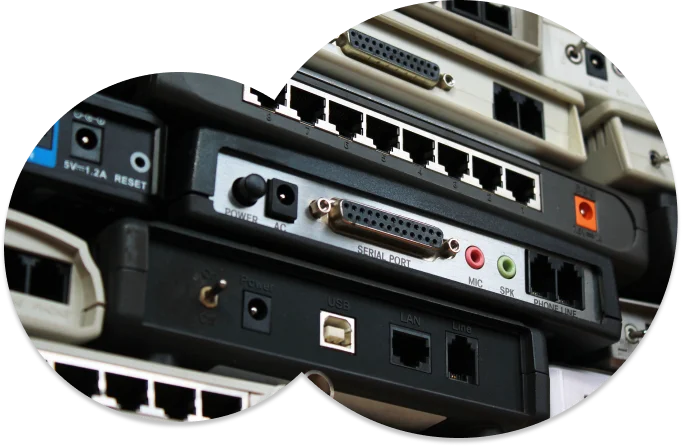
SunCoast Communications has built its reputation on managing the complex reverse logistics of high-stakes telecom environments. We do not just show up with tools and start clearing racks. Our process begins with an exhaustive physical audit and network verification phase that runs parallel with your engineering team.
We trace every connection and verify every power drop and cross-reference physical serial numbers with your asset management databases before a single cable is disconnected. We develop a highly detailed, site-specific method of procedure that outlines the exact sequence of the teardown. This sequenced approach isolates the legacy equipment completely, ensuring that neighboring active systems remain entirely undisturbed during the physical removal process.
Protecting the Security Perimeter at the Asset Level
Decommissioning hardware involves more than just managing physical weight and fiber connections; it is a critical data security event. Legacy line cards, control processors, and memory modules store sensitive network topologies, active configuration files, and customer routing data. If these modules are extracted and shipped without proper security oversight, you are creating a major vulnerability in your network architecture.
Throughout our decommissioning workflow, SunCoast maintains a strict and transparent chain of custody. Every component extracted from a rack is logged immediately. We perform certified data sanitization on all storage modules to ensure that your proprietary network configurations are permanently erased before the hardware enters our processing channels. This process gives your security compliance officers the documentation they need to verify that your physical security matches your digital defenses.
Read More: What is the IT Infrastructure Decommissioning Process?
Monetizing Your Legacy Telecommunications Infrastructure
The financial advantage of working with SunCoast is our ability to turn an expensive decommissioning project into a direct source of revenue. The legacy hardware you are retiring still holds significant value on the global secondary market. There are hundreds of regional operators and international carriers who continue to rely on these platforms and are actively looking for reliable, tested replacement parts to maintain their existing footprints.
Because we are a global leader in telecom hardware remarketing, we can accurately grade, refurbish, and resell your retired components. The capital recovered from this resale can directly offset the engineering costs of the decommissioning project, and in many scenarios, return substantial funds to your network expansion budget. You are transforming a legacy liability into a financial asset that funds your future growth.
Secure Your Next Network Evolution
Do not let the fear of service disruptions or logistical complexity stall your network modernization goals. A legacy infrastructure teardown should be a clean, secure, and profitable step forward for your business.
Partner with an engineering firm that understands the technical realities of enterprise telecommunications. Contact SunCoast Communications today to learn how our specialized decommissioning services can protect your network uptime and maximize your capital recovery.