
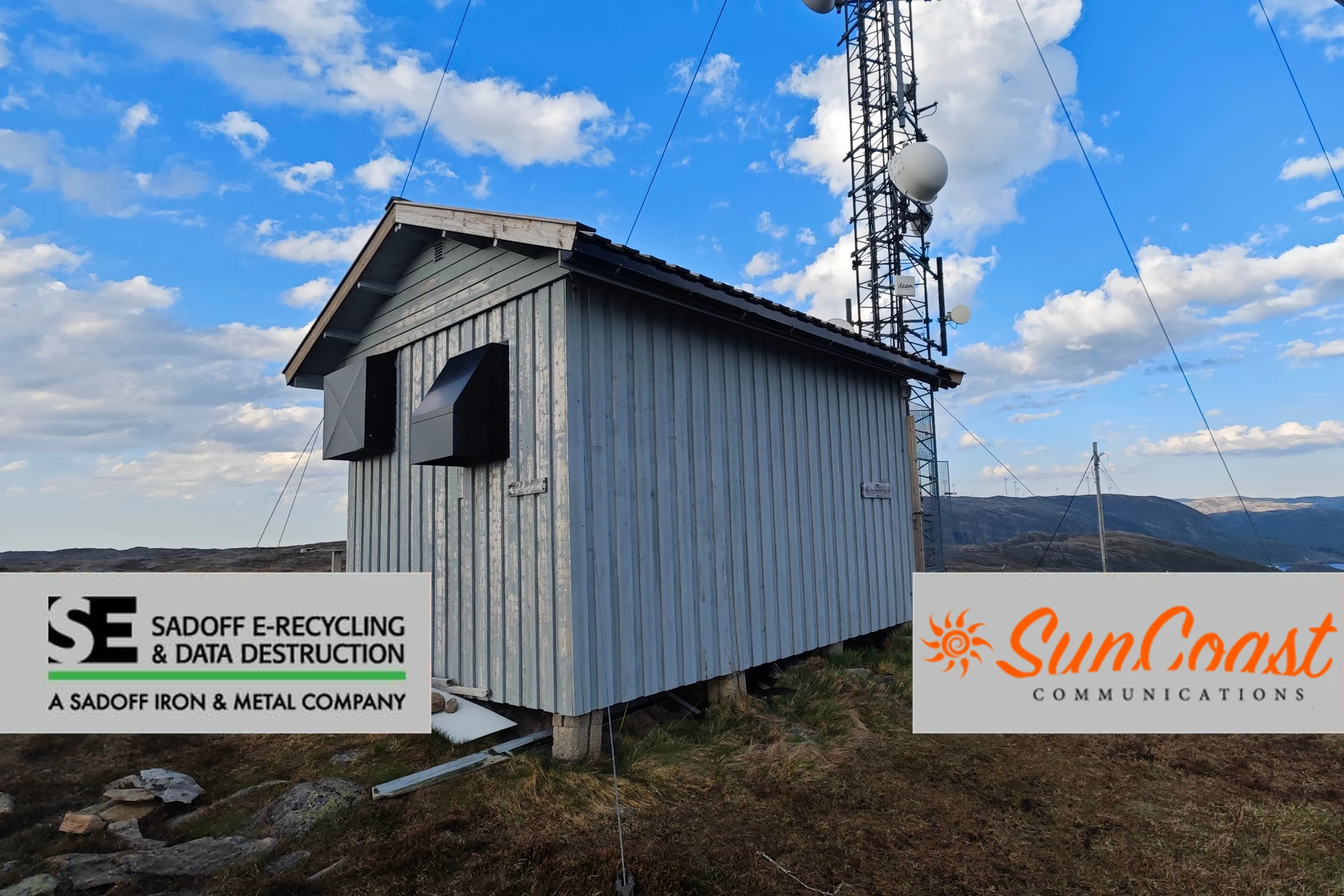
The Complex Logistics of Remote Telecom Shelter Decommissioning
The equipment inventory may fit on a spreadsheet. Removing that equipment from a remote site is another matter.
Decommissioning remote telecom shelters brings teams face-to-face with gravel roads, restricted access, and freight schedules leaving no room for surprises. A site may appear ready for retirement on paper while its battery plant still supports an adjacent installation. The truck booked for pickup may be unable to maneuver within the compound.
At SunCoast, we approach equipment retirement as a coordinated recovery project. For remote shelters, the removal plan must account for what happens beyond the shelter door.
The Access Road Belongs in the Project Scope

A site survey should verify whether planned vehicles can reach the compound under standard conditions. Road width matters, as do bridge restrictions and space for unloading. A route passable for a service pickup may be impassable for a loaded trailer.
Then there is the gate.
Don’t let a missing key or a surprise escort requirement stall your crew on mobilization day. Lock down all site permissions and entry logistics well before deployment to avoid paying for downtime. Your site survey should also cover heavy equipment logistics, like the exact setup zone and access path for a crane. Finally, treat the building teardown separately from the hardware pull. Demoing an equipment shelter takes a very different playbook than just clearing out server racks.
Weather can overturn these assumptions overnight. Soft ground or an impassable access road may force delays even when internal equipment is ready. A practical schedule designates who can halt deployment before vehicles leave base.
Verify What Can Physically Be Disconnected
Retirement status does not confirm power isolation. Nor does it prove all circuits were migrated.
Before removal, the operator’s engineering team must confirm inactive connections and critical infrastructure. Shared power arrangements and undocumented fiber routes complicate seemingly simple teardowns. Our article on decommissioning legacy telecom systems without disruption explores why physical verification matters alongside network records.
The approved work plan should specify removal sequences and authorizations at each phase. Electrical work requires qualified personnel and energy-control procedures, including stored energy in backup systems. A “quiet” shelter may still house live equipment.
Communication also requires backups. With unreliable mobile coverage, crews need agreed methods to contact network operations and request authorizations. Discovering gaps after shutdown windows open leaves teams stranded beside untouchable equipment.
Battery Removal Can Revise the Freight Plan
Battery plants introduce logistics exceeding standard freight. Chemistry and condition affect shipping classifications. Lead-acid and lithium batteries aren’t interchangeable cargo, and damaged units demand special handling.
These decisions must precede pickup day.
The logistics plan must establish packaging, destinations, and compliant transport. Resolving these with batteries already on the loading dock halts the entire removal.
Limited staging space tightens the sequence. Batteries awaiting collection may occupy space needed to pack reusable hardware. A delayed carrier thus stalls work inside and outside the shelter. Dispatch timing must reflect actual available space.
Preserve Equipment Identity Before Site Departure
Our asset recovery services link equipment removal with cataloging and refurbishment/resale assessment. This matters at remote sites, where returning to identify an unmarked module may cost more than its value.
Part and serial numbers must remain tied to originating sites during collection. Reusable components need transit protection. Hardware arriving loose in mixed scrap loads is harder to evaluate, and preventable damage may eliminate resale potential.
Not all retired assets warrant remarketing.
Recovery decisions must factor demand, testing costs, and transport expenses. Consolidating multiple removals reduces freight costs, but storing equipment delays lease returns. Sometimes cheaper trucks create costlier projects.
Data-bearing components require documented disposition paths too. Service deactivation does not equal sanitization of configurations or sensitive data.
Define the Condition Required at Hand Back
If your retired equipment can’t be refurbished and resold, our partnership with Sadoff E-Recycling & Data Destruction ensures it doesn’t end up in a landfill. We run value recovery and certified recycling side-by-side in the same project, keeping a strict chain of custody on every single asset.
Clearing out the physical property is a different animal and needs its own scope. You have to establish upfront whether the physical shelter stays put, and exactly how deep the teardown goes regarding concrete pads and underground utilities. If the site includes generator fuel systems or industrial cooling units, you’ll need certified specialists beyond the crew pulling your server racks. Ironing out those exact boundaries on day one makes scheduling contractors much easier and prevents headaches with the property owner at final walkthrough. Keep in mind that shipment records and completion photos only verify the gear you removed. They won’t fix a contract dispute over site work that got overlooked.
For a remote shelter retirement, contact our team with the site location and the required hand back condition so we can talk through the scope.