

Maintaining Control over Network Policy with Secondary-Market Sandvine PTS Equipment
In carrier-grade telecommunications networks and corporate service provider networks, visibility and granular traffic management are essential for operational survival. Modern broadband networks must process enormous volumes of video streaming, gaming traffic, corporate cloud applications, and voice data through complex, distributed network backbones. To manage this demand and maintain quality of service guarantees, network operators rely heavily on deep packet inspection and policy enforcement platforms.
Among the foundational platforms deployed in networks around the world, the Sandvine Policy Traffic Switch, commonly known as the Sandvine PTS, constitutes an industry benchmark in real-time traffic shaping, billing optimization, and regulatory policy control. However, managing and expanding a network dependent on Sandvine PTS infrastructure involves serious operational and financial friction. When line cards fail or expanding network nodes require additional traffic shaping capacity, operators face extreme lead times and astronomical price structures from original equipment manufacturers. Sourcing certified Sandvine PTS equipment from the secondary market provides the strategic solution network operators need to maintain full control over policies without exceeding capital expenditure limits.
Deep Packet Inspection: Why Network Policy Depends on It
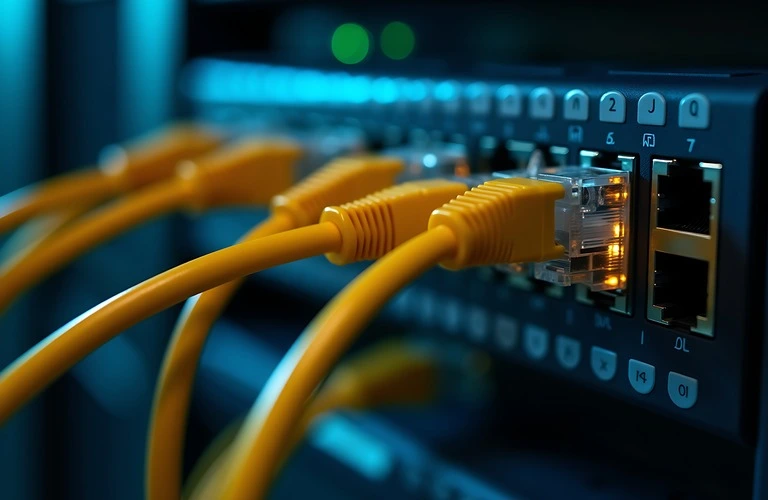
You can’t manage traffic you can’t see. Standard routers and switches read packet headers and move traffic from point A to point B — that’s the whole job. They have no idea whether the packet in front of them belongs to a Zoom call, a cloud backup, or someone streaming in 4K.
That’s where Sandvine’s Policy Traffic Switch comes in. It works at layers four through seven of the stack and inspects packets at line rate, even across multi-gigabit and terabit interfaces. So instead of guessing, the operator actually knows what’s on the network and can act on it: find the congestion before subscribers find it, push voice and video ahead of bulk traffic, apply fair-use rules, and absorb a DDoS attack without the whole pipe going down with it.
Lose that visibility and things fall apart fast. A single failed processing card can knock out the policy enforcement engine on a node, and suddenly nobody is steering bandwidth anymore. Traffic does what traffic does — it floods whatever link is closest, subscribers notice, SLA penalties start accruing, and instability spreads to parts of the network that had nothing to do with the original fault.
The Benefits of Using Refurbished Telecommunications Equipment
Escaping the Trap of Forced OEM Platform Migration
A recurring operational dilemma for network engineers is the artificial obsolescence cycles imposed by major equipment manufacturers. Original equipment manufacturers routinely announce end-of-life (EOL) status for stable, field-proven platforms such as specific generations of Sandvine PTS equipment. The manufacturer halts regular production of replacement interface modules, stops selling individual line cards, and drastically raises software support fees.
The main objective of this OEM strategy is clear: to force the service provider into a costly “forklift” replacement with the manufacturer’s newest platform generation. For a regional telecom operator or a corporate network, replacing a fully functioning policy management architecture simply because the vendor withdrew a specific module constitutes an inefficient and unnecessary capital expenditure. By working with SunCoast Communications, operators can skip this forced migration entirely. We source, stock, and maintain certified secondary-market Sandvine PTS equipment, allowing your engineering team to keep stable, proven policy enforcement platforms running smoothly on your own operational schedule.
Laboratory Load Testing of Policy Enforcement Platforms
Deploying secondary-market deep packet inspection equipment into an operating carrier network requires complete technical confidence. Deep packet inspection engines perform complex, memory-intensive computational tasks on live data streams. Installing an unverified switch or an untested line card originating from an unverified secondary-market broker can introduce packet latency, buffer overflows, or unexpected software failures into the core of your network.
SunCoast eliminates these technical risks thanks to our engineering testing laboratory. Every Sandvine PTS chassis, every interface module, and every power unit that enters our facility undergoes thorough diagnostic procedures. We test the deep packet inspection processing engines under simulated high-throughput conditions, verify port signaling integrity on all interfaces, inspect power supplies under full electrical load, and confirm that equipment management interfaces respond without errors. When a certified Sandvine PTS unit leaves our engineering facility, it is fully stabilized, cleared of all legacy configurations, and ready for immediate deployment in your production network.
Read More: How to Find Refurbished Equipment in Telecom
Economical Scaling of Bandwidth and Quality of Service
In addition to solving bottlenecks related to emergency maintenance and component failures, sourcing certified Sandvine equipment from the secondary market enables operators to scale traffic shaping capabilities cost-effectively. Expanding broadband capacity to new regional markets or increasing interface density in existing switching nodes requires significant hardware investments.
Acquiring certified refurbished Sandvine PTS modules allows operators to expand the reach of policy enforcement by fifty to seventy percent below the cost of new OEM equipment. This significant capital saving allows regional service providers to deploy high-grade deep packet inspection deeper into network edges, improving traffic management and subscriber satisfaction while simultaneously preserving key cash reserves for physical fiber expansion. You achieve carrier-grade performance and full control over policies without sacrificing your operational budget.
Keep Your Traffic Management Platforms in Excellent Shape
Do not allow vendor delivery backlogs or artificial end-of-life announcements to threaten your control over network policy or force your company into premature capital upgrades. Your traffic shaping infrastructure can remain robust, scalable, and cost-effective thanks to a well-considered secondary-market equipment strategy.
Maintain full network visibility and protect your capital budget. Contact SunCoast Communications today to explore our certified inventory of secondary-market Sandvine PTS platforms and specialized telecommunications equipment solutions.